Why we built this
The spark: “Did I leave the stove on…?”
A familiar worry turned into a project idea — if a robot can see and move on its own, why not have it check on the house for you, wherever you are?
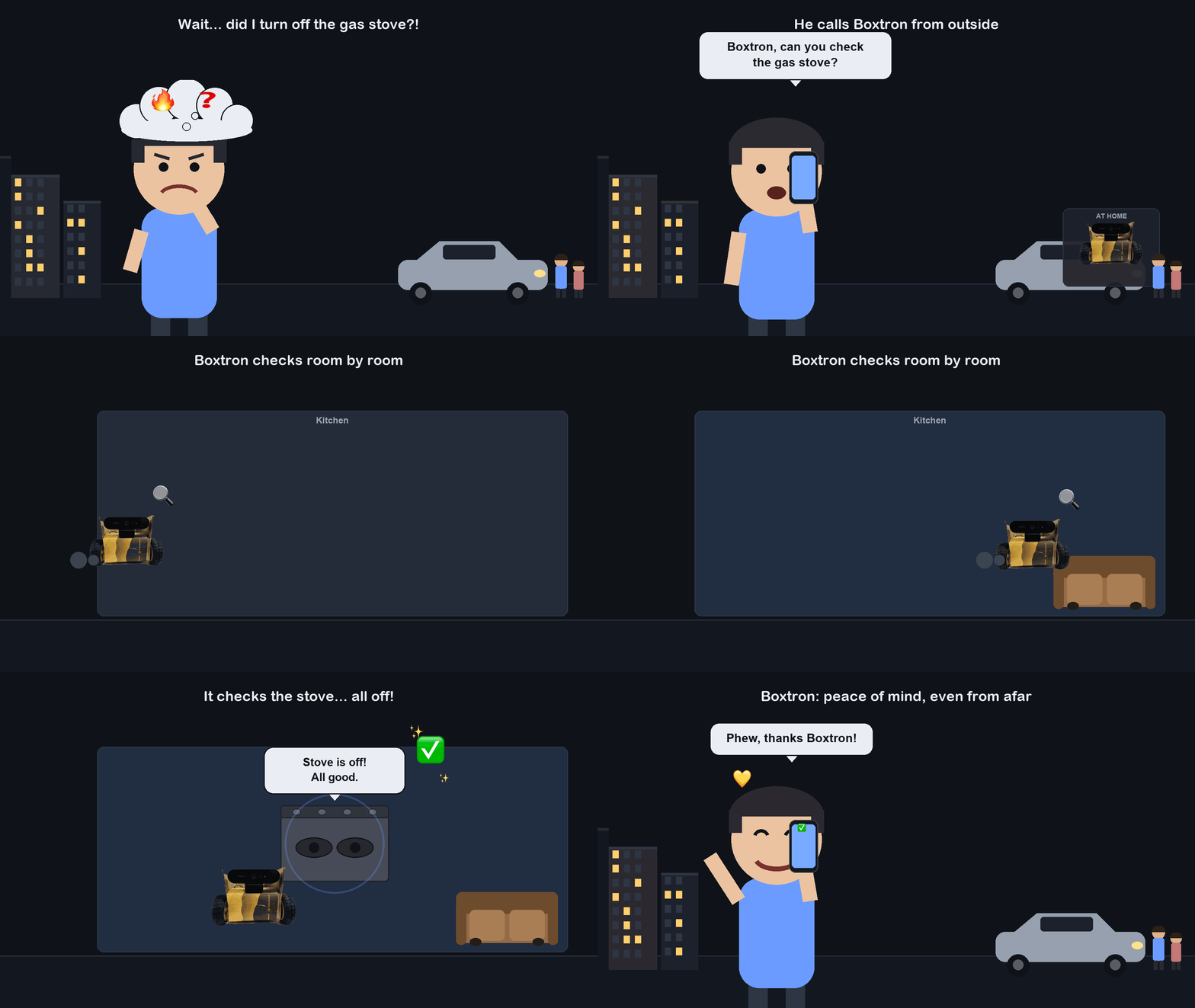
Why we built this
A familiar worry turned into a project idea — if a robot can see and move on its own, why not have it check on the house for you, wherever you are?
How it’s built
No machining, no 3D printing, nothing custom-ordered — just parts you’d find in a junk drawer or an Amazon cart.
An Amazon delivery box, doubled up for strength — free, sturdy, already in the recycling bin
A Raspberry Pi 5 — a full computer the size of a deck of cards
A regular USB webcam — plug and play, no special drivers
One small motor driver board — a few dollars, wires straight to the Pi
A handful of hobby motors and tires — the kind sold for school science projects
A battery pack, off the shelf — nothing custom to charge or regulate it
Put together over a couple of days — simple parts, snapped together, doing something clever.
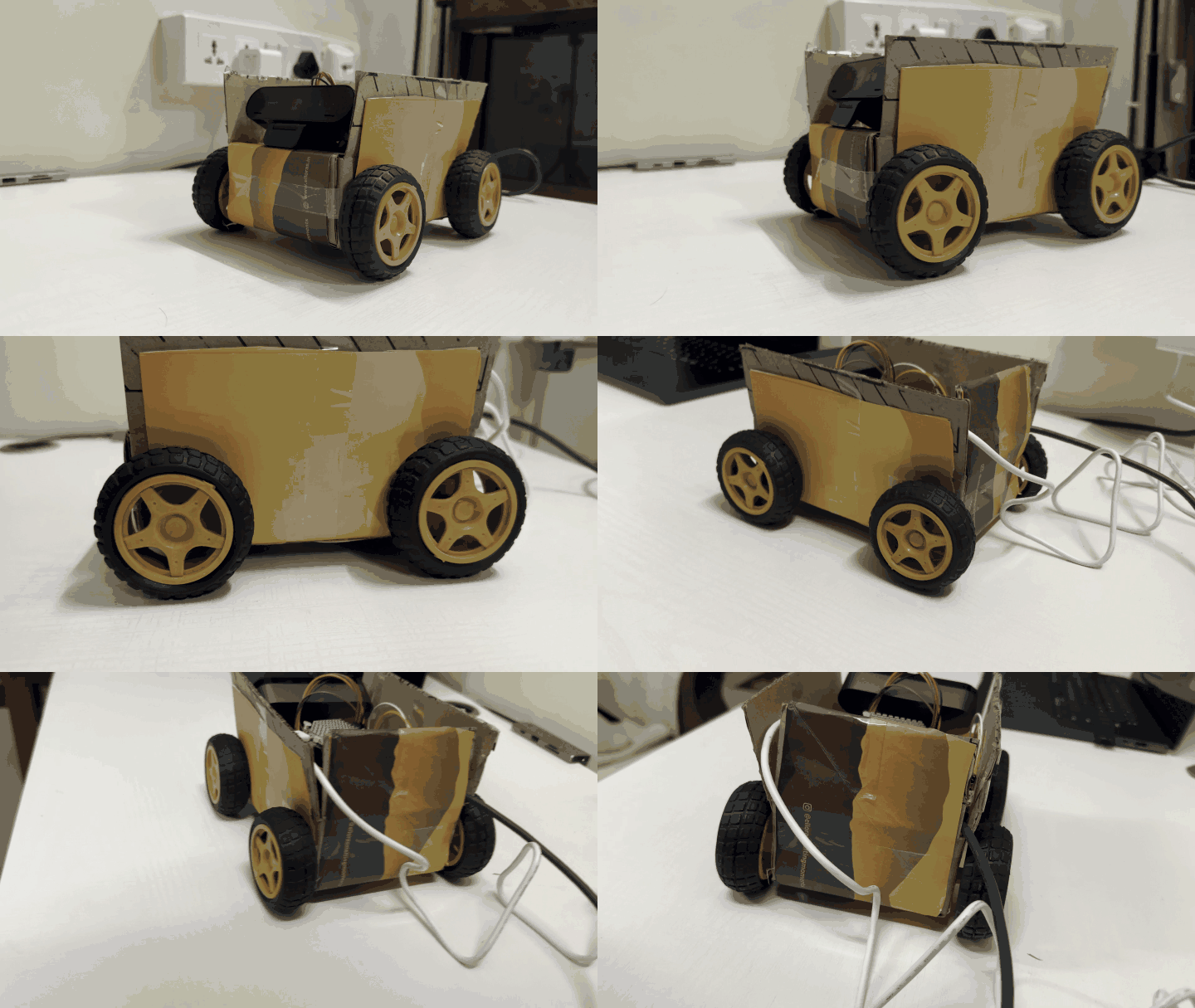 Built over a couple of days, one side at a time
Architecture
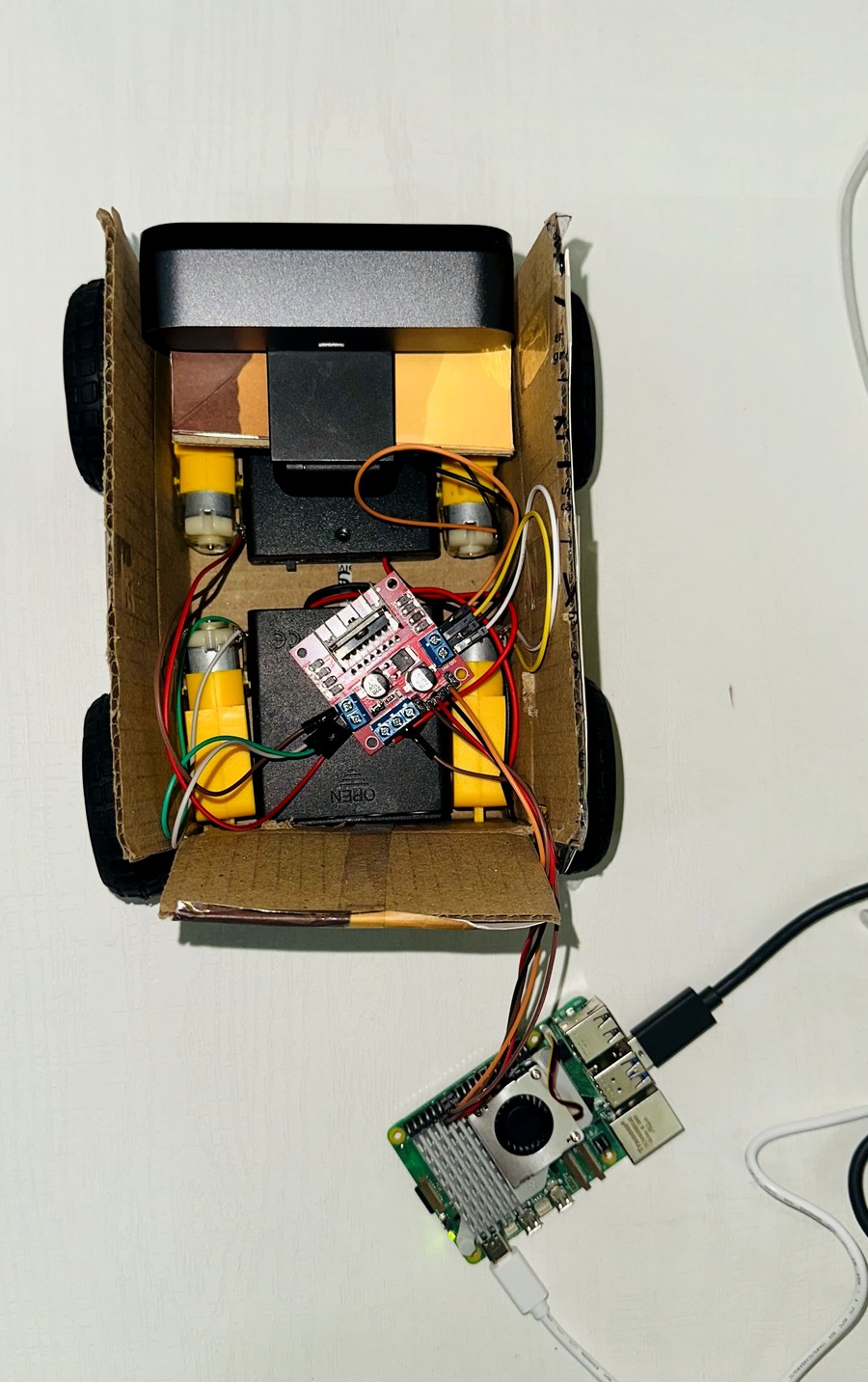 Inside the box — motors, driver board, and the Pi 5
What it can do today
Every model runs locally: no cloud, no API key, nothing leaves the machine.
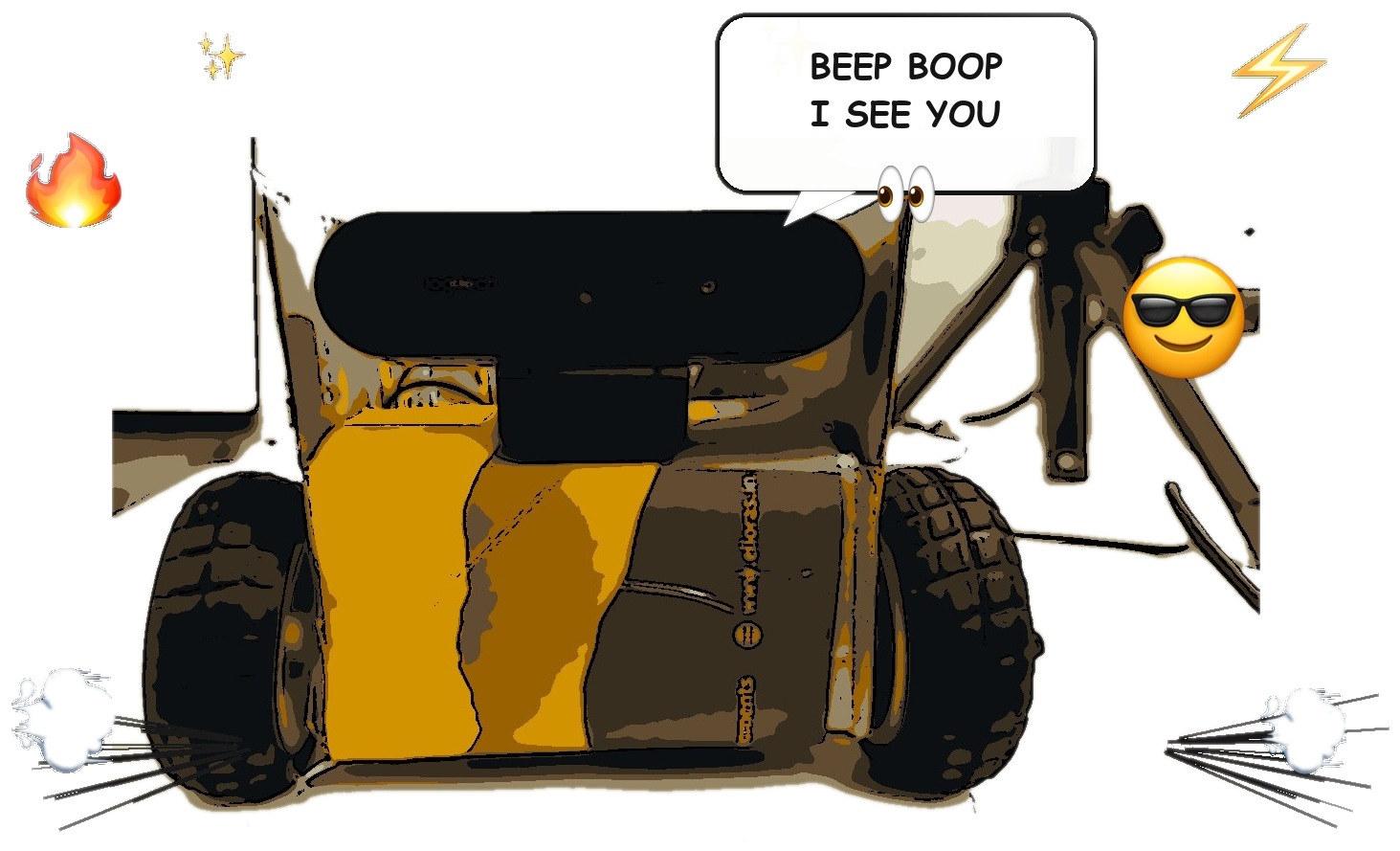
Boxtron
Questions?